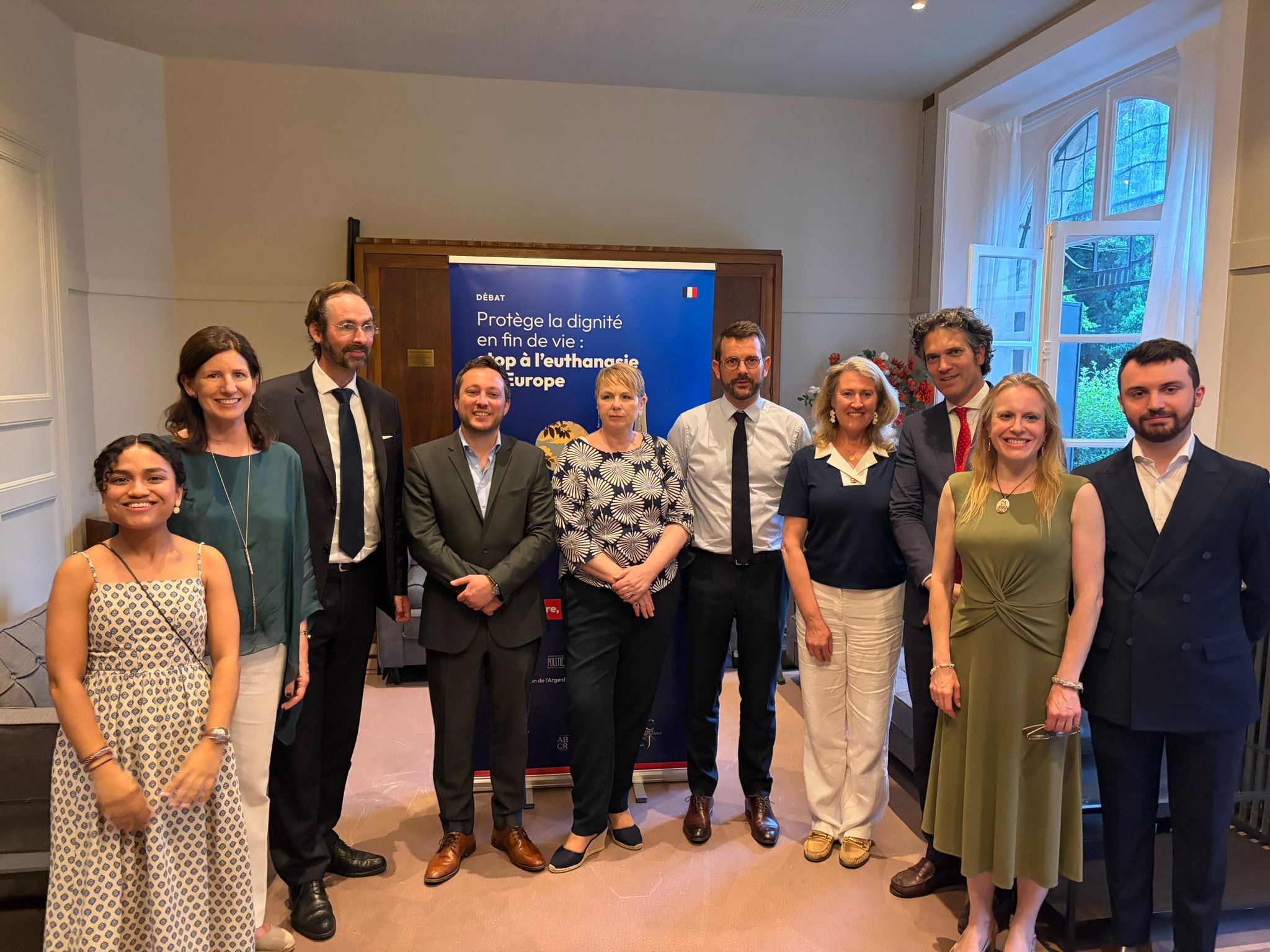
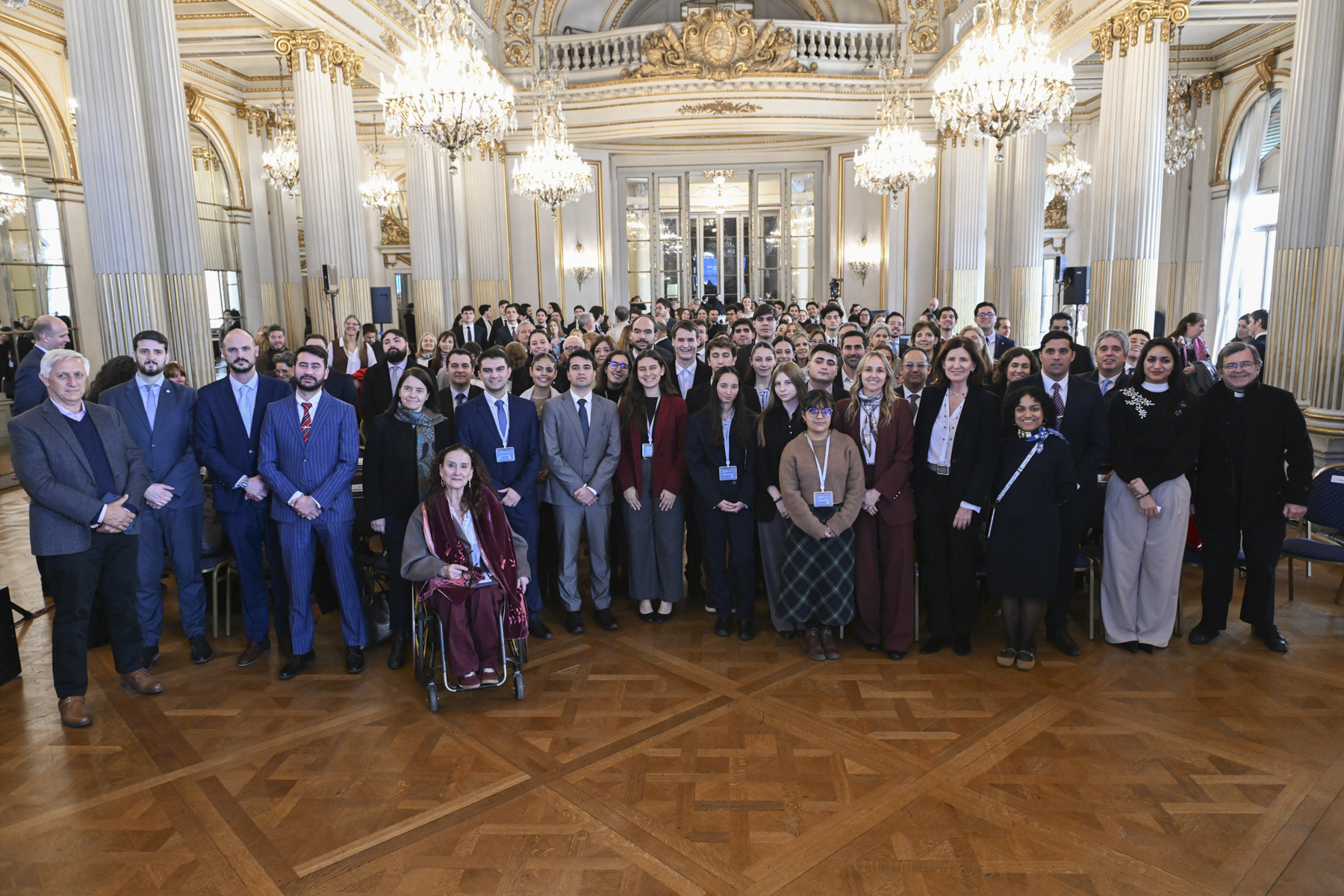
Buenos Aires | Creating a Family Impact Index to measure how every public policy affects families, replacing welfare-based approaches with a “family mainstreaming” perspective, and strengthening parents’ rights to educate their children were among the central proposals discussed at the “Freedom for the Future” Political Forum, held on June 23 at the Legislature of the City of Buenos Aires.
The event brought together more than 200 participants—including members of Argentina’s Legislative and Executive branches at the national, provincial, and municipal levels, civic leaders, and experts from Argentina, Chile, the United States, and Hungary—around a shared diagnosis: declining birth rates and the weakening of family bonds require governments to place the family at the center of public policy.
The forum was convened by the international network Political Network for Values (PNfV), in partnership with Fundación Faro, Argéntea, Mises Cono Sur, Global Center for Human Rights, and Fundación Free.
Declining Birth Rates at the Center of the Debate
Clara Muzzio, Deputy Chief of Government of the Autonomous City of Buenos Aires, argued that demographic decline cannot be explained by economic factors alone but also has a cultural dimension. She stressed the need for a paradigm shift, noting that the city faces a “vital deficit”: since 2019, deaths have outnumbered births, and dogs now outnumber children.
“Recovering the shared heritage of a people that values life and the family is an urgent task. We do not want to return to the past; we want to renew that heritage so that it opens new paths to safeguard the free pursuit of happiness today,” said Santiago Santurio, National Deputy and Argentine member of PNfV’s Advisory Council.
Gabriel Mraida, Buenos Aires City Minister for Human Development and Habitat, argued that many social problems stem from broken family relationships and criticized welfare policies that perpetuate dependence on the State. He proposed placing the family at the center of public policy in order to strengthen it as society’s first and most important network of support and care.
Carmen Soza, Executive Director of the Chilean think tank Ideas Republicanas, originally proposed the creation of a Family Impact Index as part of a broader “family perspective” approach that would integrate family considerations across public policies at every level of government.
Legal scholar Úrsula Basset, Director of the Family Law Research Center, argued that direct subsidies have limited impact unless structural conditions exist to sustain the project of motherhood, adding that declining birth rates also reflect a deeper crisis of meaning and expectations.
Vajk Farkas, of Hungary’s Center for Fundamental Rights, presented his country’s experience: after ten years of family-strengthening policies, marriages have doubled, divorce has fallen by 57 percent, and today 75 percent of children are born to married parents.
For National Senator Carmen Álvarez, Argentina’s declining birth rate is a symptom of a country that has lost stability over many years, making access to housing more difficult and undermining confidence in the future.
Municipal Governments: The Front Line
Ramón Lanús, Mayor of San Isidro, argued that every government should ask itself why it governs, and that the answer should be both obvious and concrete: “to improve the lives of the families in our cities, because it is within the family that the future is forged.”
Rodrigo Aybar, Mayor of Tres de Febrero, highlighted a municipal maternity support program that enrolled more than 130 pregnant women during its first two months and will accompany their children throughout their first 1,000 days of life. He said initiatives like this have gained broad public support and become a point of consensus among different political sectors within the municipality.
Fernando Rambaldi, Mayor of La Calera, described the restructuring of municipal assistance programs to prevent clientelism and make family well-being the central criterion guiding public management.
Comprehensive Child Protection and Parental Rights
National Deputy Joaquín Ojeda identified two emerging challenges for child protection: gender ideology in educational institutions and minors’ access to hormone treatments and sex-change procedures. He stated that Argentina’s current national government has a clear values-based agenda in which gender ideology has no place.
Nahuel Sotelo, Provincial Deputy of Buenos Aires Province, described how provincial educational programs—particularly Identidades Bonaerenses (“Buenos Aires Identities”)—encourage children as young as four years old to question their sexual identity without their parents’ knowledge. He noted that the province has 140 hormone treatment centers, 29 of which specifically serve children. According to Sotelo, the system appears designed so that children entering the educational system eventually end up in hormone treatment centers.
Buenos Aires City legislator Andrea Freguia announced that she has introduced legislation before the City Legislature to protect minors from hormone treatments and sex-change procedures within the Autonomous City of Buenos Aires.
The U.S. experience was presented by Laura Bryant Handford, policy analyst at The Heritage Foundation, who reviewed recent judicial and legislative debates concerning parental rights, participation in women’s sports, and medical gender-transition treatments for minors.
She noted that several U.S. states have adopted restrictions on such procedures and argued that, where broad prohibitions are not politically feasible, an important first step is to guarantee by law that schools inform parents about educational content and decisions affecting their children.
A Shared Agenda
The forum was attended by former Vice President Gabriela Michetti, who remarked that this was the first time she had participated in an event on birth rates and child protection that brought together such a politically diverse audience alongside so many leaders from civil society. She described this as an encouraging sign that reflects the growing importance of both issues.
PNfV, the forum’s principal organizer, is an international platform that brings together leaders from 45 countries committed to the defense of life, the family, and fundamental freedoms. Its members participate in a personal capacity. The network is non-denominational and suprapartisan. Its Executive Director, Lola Velarde, also participated in the forum.
*